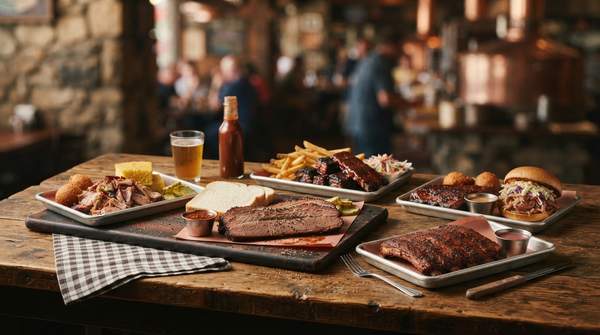
American barbecue is not one cuisine but a family of regional arguments, each with its own protein, seasoning philosophy, and smoke ritual. Texas builds its identity around beef and minimalist smoke; Carolina insists on pork and a vinegar tang; Kansas City slathers everything in thick, sweet sauce; Memphis leads with dry rub and bark. The best way to choose your next plate is to compare those four profiles side by side.
Introduction to American Regional BBQ
Barbecue in America is a collection of regional traditions rather than a single national style, as Smoke and Fire Festival's guide puts it, with each region developing "its own unique flavours, cooking methods and signature sauces" across generations. Those traditions now travel widely: techniques, rubs, and sauces from the classic barbecue regions get copied across the country. But the originals still set the terms of the debate, and four names dominate it: Texas, Carolina, Kansas City, and Memphis. Grill Masters Club offers a useful shorthand for telling them apart: styles aren't rules, they're priorities.
Carolina BBQ: Whole Hog and Vinegar Tang
Carolina barbecue puts pork first — the whole hog in its most celebrated form — and seasons it with a sharp, vinegar-based tang rather than sugar or heavy tomato. Pitmasters cook the meat low and slow over smoldering coals until it can be chopped or pulled, then dress it with that thin, peppery vinegar sauce, which cuts the richness of the fat. The result is barbecue you taste in layers: smoke first, tang second, pork always. If your ideal plate leans savory and acidic rather than sticky-sweet, Carolina is your lane. Just note that the tradition varies within the state, with Eastern North Carolina's whole-hog approach being the most famous expression rather than the only one.
Kansas City BBQ: Sweet, Saucy, and Diverse
Kansas City is the grinning maximalist of the group. It's a style built on variety: beef, pork, chicken, and more, all slow-smoked, with ribs and burnt ends among the signatures. Its calling card is the sauce — ultra-thick, loaded with brown sugar, molasses, and tomatoes, and often slathered on during and after the cook. WebstaurantStore's guide notes that brown sugar anchors the classic Kansas City rub, with traditional recipes calling for a two-to-one ratio of brown sugar to paprika, and that pitmasters keep their heat low specifically to stop all that caramelizing sugar from charring. Tasting Table traces the eclecticism to geography: as an early Missouri River boomtown, Kansas City sat midway between Western livestock breeders and East Coast consumers, so every kind of meat passed through its smokehouses.