Here is the uncomfortable truth behind every great cocktail: you cannot chill a drink without diluting it. This trade-off is so basic that bartending writer Dave Arnold's Cooking Issues blog calls it the fundamental law of cocktails — every degree of coldness you buy, you pay for in melted ice. That means dilution isn't a flaw to minimize; it's a variable to steer. Choose the right ice, apply the right technique, and you can land your drink at a target temperature and strength on purpose rather than by luck.
Ice Type: The Foundation of Dilution Control
The single most important physical property of ice, for cocktail purposes, is its surface area relative to its volume. Small pieces of ice expose far more melting surface per gram than big ones, and that ratio governs how fast chilling and dilution happen. As Tom Macy's cocktail guide puts it plainly, "the larger ice cubes you have, the slower they will melt, meaning you'll need to shake or stir for longer than you would with smaller cubes."
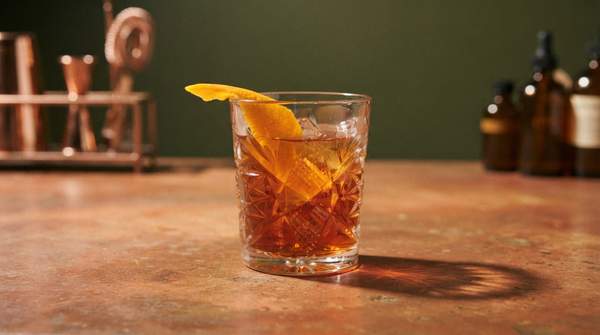
That slower melt is not a drawback — it is your margin of error. RyeCentral, in a dilution guide credited to Kevin Lawton, recommends one 2.25-inch sphere or 2-inch cube as the best ice for controlling dilution in an Old Fashioned, precisely because its low surface-area-to-volume ratio means slow dilution and a controllable process. The site's advice is blunt about the alternative: cubed and crushed ice "over-dilute the cocktail before you can reach the target endpoint."
Note what this does not mean. Macy is careful to point out that no type of ice chills or dilutes a drink "better" than another — any ice will get you there, whether big, small, wet or dry. The difference is rate. Big ice reaches a given amount of melt slowly, giving you time to stop; crushed ice races through its melting budget almost immediately, which is why it suits drinks that are meant to be cold, light and fast-drinking rather than slowly sipped.
There is also a subtlety most home bartenders never consider: not all of your ice's chilling power goes into the drink. As Cooking Issues observes, some chilling is consumed by the mixing vessel itself, and "in stirred drinks especially, the type of container you use makes a difference." A thick room-temperature mixing glass absorbs cold from your cocktail before it ever reaches your lips, which means your actual dilution and temperature will depend on your equipment, not just your timing.
Even the flavor integration you prize in a stirred drink may be tied to this slow process. RyeCentral suggests that stirring plus ice-melt produces more integrated flavor than simply adding water to the glass, "possibly due to slow dilution allowing flavor molecules to bind/release at different rates." The mechanism is offered tentatively, but the practical implication is clear: the gradual melt of a big rock is doing flavor work that a pour of water cannot replicate.
One more wrinkle from Cooking Issues: big ice also affects the drinking experience after the stir is done. Because a large rock melts slowly, "it can get above 0°C pretty quickly when served with big ice" — a drink served on one big cube will drift warmer as you sip. The author's own preference for an Old Fashioned is to accept that slow warming rather than "let it get too watery." That is the real decision big ice asks of you: a slightly warmer, stronger drink instead of a cold, thin one.