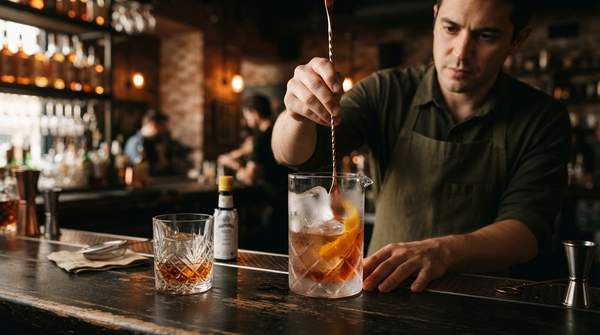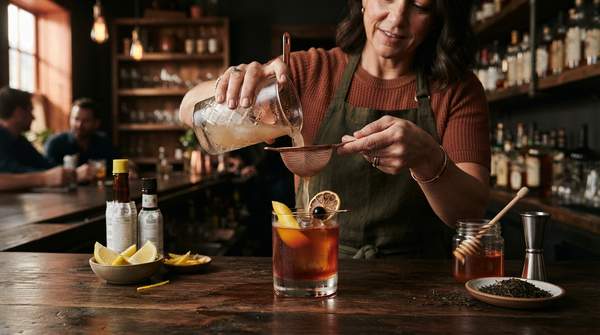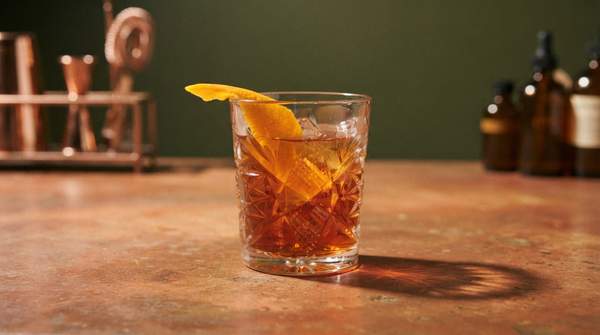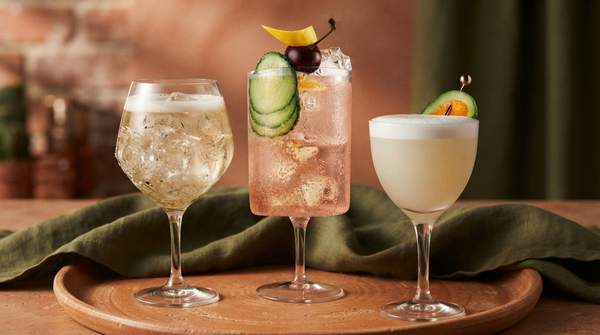
The fastest way to make your next home gathering feel like a reservation you couldn't get is to change one component of a drink your guests already love. Swapping the gin in a Last Word for mezcal, steeping hibiscus into a bottle a week before the party, or treating the Martini's olive as an ingredient rather than an afterthought: each move shifts the flavor and the effort required in a different way. I've pulled four twists from recent drink writing and rated them on the three dimensions that actually matter at home—what you change, what it tastes like afterward, and how much work it costs you.
Elevate Your Home Bar: Creative Cocktail Twists Explained
The current wave of riffs isn't about inventing drinks from scratch; it's about creative disrespect for the canon. A Food52 roundup of summer cocktails, for instance, collects a "floral twist on a classic" Negroni credited to Travelle at The Langham in Chicago alongside jalapeño-and-cucumber Margaritas. The lesson is that a twist works best when the original is familiar enough that guests can taste the departure. A Negroni, a Last Word, and a Martini are all famous enough to serve as canvases, which is why this guide sticks to well-known classics rather than obscure builds.
The other encouraging truth: none of these twists demands professional equipment. One of them requires only that you buy a different bottle. None of what follows is an exhaustive menu—think of it as a tasting flight of techniques.
The Art of the Twist: Core Techniques for Flavor Transformation
Most cocktail riffs reduce to three moves, and each moves the flavor differently.
- The spirit swap. Replace the base spirit outright. This changes the backbone of the drink entirely, because the botanicals, smoke, or grassiness of the new spirit carry through every sip. It's the lowest-effort twist—essentially a shopping decision.
- The infusion. Steep a flavoring ingredient into a spirit or component ahead of time. As one home cook who infuses her own bottles puts it, the process is "stupidly easy"—pick a liquor, pick an ingredient, let it sit—though it demands lead time of roughly a week. Infusions add what drink writers describe as new layers of flavor rather than replacing existing ones.
- The garnish or modifier. Change the smallest component in the glass. Flavor pairing advice from Regatta Grove suggests thinking of a cocktail like a dish, balancing complementary flavors; a garnish is where that thinking gets its finishing touch. The flavor impact is quieter, but so is the labor.
Choose Your Twist: A Home Bartender's Decision Framework
Here's the comparison that does the deciding for you. I've categorized each twist by the type of modification it uses, what that modification does to the flavor, and how much preparation a home bartender should expect.
| Classic Cocktail Base | The Twist (Ingredient Modification) | New Flavor Profile | Preparation Difficulty |
|---|---|---|---|
| Negroni | Spirit infusion with hibiscus (floral twist credited to Travelle at The Langham, Chicago) | Floral notes layered onto the classic bitter backbone | Medium (simple setup, ~1 week infusion time) |
| Last Word | Spirit swap: mezcal substituted for the original gin | Smoky, earthy depth—the drink's advertised "Mexican flair" | Low (a direct substitution) |
| Martini | Garnish enhancement: chamoy-flavored Castelvetrano olives | Spicy-sweet chamoy against the olives' floral, fatty notes | Medium (flavoring the olives is a distinct prep step) |
| Margarita | Modifier addition: jalapeño and cucumber | Refreshing heat layered over the lime-driven original | Low (component addition) |
Read it as a decision matrix: pressed for time? Pour the Ultima Palabra. Planning a week out? The Hibiscus Negroni rewards patience. Obsessed with the details? Chase the olive.
Hibiscus Negroni: Floral Infusion for a Classic
The Food52 roundup describes this simply as a "floral twist on a classic," and that understatement is the point. Infusing alcohol with hibiscus is a well-trodden home technique: one kitchen writer's method calls for pouring a 750ml bottle of blanco tequila over about half a cup of dried hibiscus, covering it, and letting it sit for one week in a dry, cool place before straining. She recommends the spirit "use as you would any other" tequila. Applied to a Negroni's gin, the same logic layers a tart, floral note over the Campari's bitterness.
Difficulty here is genuinely medium—and only because of the calendar. The setup takes minutes; the flavor takes days. Start the bottle the weekend before your party and the work is already done when guests arrive.
Ultima Palabra: A Smoky Spirit Swap for the Last Word
If you love a Last Word, Elevated Craft's recipe index insists you have to try the Ultima Palabra, a "modern riff with Mexican flair" created by Simone De Luca for High Road House Club. The mechanism is the passage's own words: substituting mezcal for the original spirit. That's a textbook spirit swap—the gin's botanicals walk out, and mezcal's smoke walks in, which is where the Mexican flair lives.
Regatta Grove's pairing guidance backs the instinct, noting that less obvious pairings—"smoky mezcal with watermelon," for instance—often yield the most delightful results. Difficulty: low. If you can stir a Last Word, you can make this; the only new skill required is buying a bottle of mezcal.
Savory Chamoy Olive Martini: Garnish with a Kick
The humble Martini olive is having a moment. PUNCH reports that a few bars across the country are paying special attention to the garnish, with recipes worth throwing together for holiday entertaining or DIY gifting. The standout: Fabian Von Hauske of New York City's Bar Contra and Wildair, who draws on his Mexico City roots and a colleague's current chamoy obsession. His reasoning is precise: the floral and fatty notes of Castelvetrano olives harmonize with the spicy-sweet flavors of chamoy, in a non-traditional version using ingredients like umeboshi and acid powders.
The published sources don't spell out the olive-preparation steps, so I'm rating this medium difficulty on logic alone: flavoring olives is clearly a separate preparation process, not a pour-and-stir drink. If chamoy proves hard to source, Von Hauske's broader point stands—treat the garnish as a course worth composing.
Your Next Elevated Cocktail: A Practical Decision
Select a creative cocktail twist that aligns with your taste preferences, the classic drink you enjoy, and your willingness to invest preparation effort. If that decision is happening tonight, the Ultima Palabra or the spicy cucumber Margarita get you there with nothing but a shopping trip; if you have a week of runway, the Hibiscus Negroni is the higher-ceiling pour; if you enjoy a small kitchen project, the chamoy olive Martini makes the garnish the conversation. The measurable indicator that you chose well is the successful preparation and enjoyment of an elevated cocktail at your next home gathering, as evidenced by positive feedback from guests or personal satisfaction with the flavor and presentation. And if one of these riffs lands, you now have the technique behind it—swap, steep, or garnish—to invent your own twist on whatever classic you pour next.
Sources
- FOOD52
- HOME/MADE: HOW TO INFUSE ALCOHOL (Bay Leaf Gin, Hibiscus Tequila & Strawberry + Pink Peppercorn Vodka) — SK
- The Art of Crafting Unique Cocktails — Regatta Grove
- Craft Cocktail Recipes — Elevated Craft
- PUNCH — Punchdrink