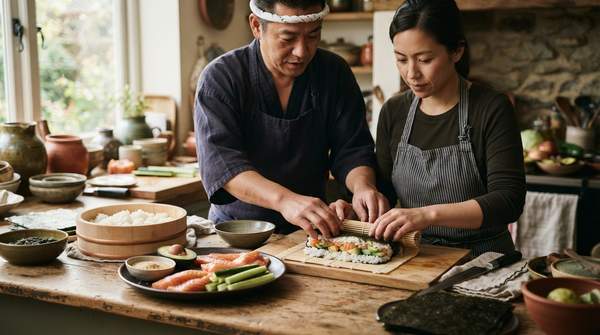
The art of making sushi can appear to be a formidable culinary challenge, one seemingly reserved for highly trained chefs with years of experience. However, creating delicious, authentic sushi rolls at home is an entirely achievable goal for the ambitious cook. According to professional chefs, success does not demand innate talent but rather a disciplined focus on a few fundamental principles. The journey begins not with complex knife work, but with mastering the three pillars of great sushi: preparing flawless rice, sourcing high-quality ingredients, and patiently practicing the physical art of rolling. By following expert guidance on these core components, any home cook can demystify the process and produce classic maki rolls, such as cucumber or tuna, that are genuinely satisfying.
Mastering Sushi Rice: The Foundation of Every Great Roll
In the world of sushi, rice is not merely a vehicle for fish; it is the soul of the dish. Achieving the perfect texture and flavor is the most critical step, and professional advice simplifies this often-tricky process. The chefs at Gordon Ramsay Restaurants recommend starting with either short or medium grain sushi rice, as these varieties contain the ideal starch content to become suitably sticky yet distinct when cooked. For consistency, they strongly advocate for using an electric rice cooker, describing it as a "cheap, reliable and useful" tool that has earned its place in the kitchen by eliminating guesswork.
Once cooked, the rice must be seasoned to become true sushi rice, or shari. This seasoning, typically a mixture of rice vinegar, sugar, and salt, provides the characteristic tangy and slightly sweet flavor that balances the richness of the fillings. For beginners, the chefs at Gordon Ramsay Restaurants suggest the convenience of a pre-made sushi vinegar mixture. For those wishing to create their own, they offer a crucial tip for elevating the flavor: add a piece of kombu (dried kelp) to the vinegar mixture. This simple addition infuses the seasoning with a deep, savory quality known as umami. Finally, handling the finished rice requires a delicate touch. The chefs caution against pressing the rice too firmly into molds or onto the seaweed, as this compacts the grains, resulting in a dense and gummy texture that undermines the entire roll.
Sourcing Quality Ingredients and Enhancing Flavors
With the rice perfected, attention turns to the fillings and condiments that define the character of your sushi. When working with raw fish, sourcing is paramount for both safety and quality. The culinary team at Gordon Ramsay Restaurants advises seeking out "sushi-grade" fish from a reputable fishmonger. An even better approach, they suggest, is to build a relationship with a local Japanese restaurant and inquire if they would be willing to sell you a small amount of fish for home use. This ensures you are getting product trusted by professionals. For those in London, they specifically mention the Japan Centre as a reliable source for all sushi-related ingredients, which also offers an online shop.
Even a basic condiment like soy sauce can be transformed with a few extra ingredients to add layers of flavor. The chefs provide a method for creating an enhanced "tosa soya" that elevates the entire sushi experience. Their process involves bringing 100ml of sake and 100ml of mirin to a boil with a small piece of kombu to cook off the alcohol fumes. Then, 500ml of soy sauce is added and the mixture is heated through again, but not boiled, to prevent it from becoming excessively salty. The final touch is adding a couple of tablespoons of bonito flakes (dried, fermented, and smoked tuna) and allowing the mixture to infuse for up to three days. This creates a sauce with a complex profile of sweetness from the mirin, umami from the kombu, and a subtle, smoky depth from the bonito.