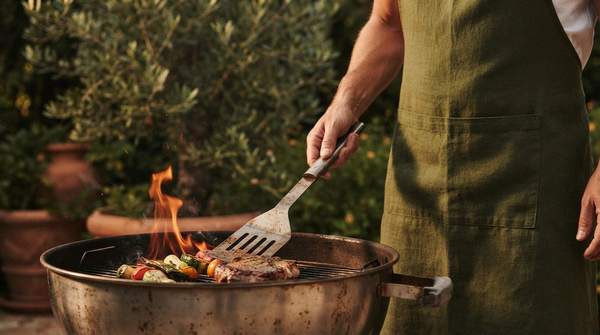
The secret to consistently great grilled food isn't a complex marinade or an expensive piece of equipment; it's mastering temperature. Understanding when to cook food directly over the flames versus away from them is the fundamental skill that prevents the common tragedy of a meal that's burnt on the outside yet raw on the inside. By learning to create distinct temperature zones on your grill, you gain the control needed to cook anything from delicate vegetables to a whole chicken perfectly every time.
The Two-Zone Fire: Your Grill's Secret Weapon
The most important concept in grilling is the two-zone fire, which establishes areas for both direct and indirect heat. This setup is the key to achieving perfect results, giving you a hot zone for searing and a cooler, more controlled zone for gentle cooking. Think of it as having both a stovetop's high-heat burner and an oven's steady convection heat available on one cooking surface.
Direct heat is exactly what it sounds like: placing food directly over the heat source. This method cooks with intense, radiant heat, creating a beautiful crust and those classic grill marks. According to grill manufacturer Weber, direct heat is best for smaller, tender foods that cook in 20 minutes or less. This includes items like burgers, kababs, thin steaks, and quick-cooking vegetables.
Indirect heat, by contrast, turns your grill into an outdoor oven. The food is placed away from the flames or coals, cooking from the hot air circulating inside the grill with the lid closed. This gentler approach is ideal for larger, tougher cuts of meat that require more than 20 minutes to cook through, such as a whole chicken, pork shoulder, or a rack of ribs. Using indirect heat ensures these items cook evenly to the center without the exterior blackening long before the inside is done.
Setting Up for Success: Two Zones on Gas and Charcoal Grills
Creating a two-zone fire is a simple process on the most common types of home grills. Before you begin, always preheat your grill for 10 to 15 minutes to ensure even cooking temperatures and help create good sear marks. Once preheated, you can arrange your heat source to establish the two distinct zones.
On a Charcoal Grill
For a charcoal grill, your two zones are determined by the placement of the hot coals. After lighting your charcoal and letting it ash over, arrange the coals to create a hot side and a cool side. You can either bank all the lit coals against one side of the grill or split them into two piles on opposite sides. The area of the cooking grate directly over the coals is your direct heat zone. The empty space, with no coals directly underneath, becomes your indirect heat zone. Placing food here and closing the lid allows it to cook via convection.
On a Gas Grill
Achieving a two-zone setup on a gas grill is even simpler and involves controlling the burners. Turn the burners on one side of the grill to your desired temperature (e.g., high or medium-high) and leave the burners on the other side completely off. The cooking grate above the lit burners is your direct heat zone, perfect for searing. The area over the unlit burners is your indirect zone. As with a charcoal grill, you must close the lid to trap the ambient heat for the indirect zone to function effectively.