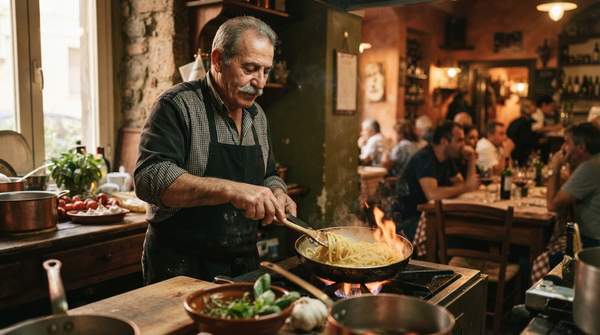
There is no universal standard for "authentic" food, and any guide promising one is selling you something. What a traveler can do is apply a consistent set of observable criteria — where a restaurant sits, who eats there, what the menu emphasizes, and how the experience is framed — and decide whether it matches their own definition of a genuine meal. This article turns that process into a working checklist, so you can walk past the tourist traps and toward the dining experiences you actually traveled for.
Understanding Culinary Authenticity: More Than Just a Taste
The first thing to understand is that "authenticity" is not a single judgment but a family of them. An analysis of how the word "authentic" is used in online restaurant reviews, published in the Journal of Cultural Analytics, draws on a typology in which the criteria being applied — external or internal — and the type of referent being evaluated, whether an agent or an object, interact to produce different kinds of authenticity judgments. In plain terms: one diner is judging whether the food matches a historical tradition, another whether the people making it are "real," and a third whether the experience feels sincere. They all use the same word.
This matters practically. If you cannot define what you are looking for, you cannot recognize it, and you are at the mercy of a restaurant's marketing. The framework below does not impose a definition; it helps you apply your own, consistently, dish after dish.
The Authenticity Spectrum: Traditional, Adapted, or Tourist-Focused?
Think of every dining experience as falling somewhere on a spectrum. At one end sits the traditional restaurant, which research on perceived authenticity of traditional food, published in MDPI, defines as an establishment dedicated to preserving, promoting, and serving the cuisine of a specific region or culture. Its value, the paper argues, lies in keeping the essence of flavors that have defined a people over time alive — a memorable experience rooted in continuity rather than novelty.
In the middle are locally adapted places: kitchens that evolve a tradition for current ingredients, costs, or tastes while remaining embedded in local life. These are not failures of authenticity; they are how cuisines actually live. At the far end are tourist-focused offerings, where the food is a prop for an experience designed and priced for visitors. The checklist that follows helps you locate a given restaurant on this spectrum before you commit your evening to it.