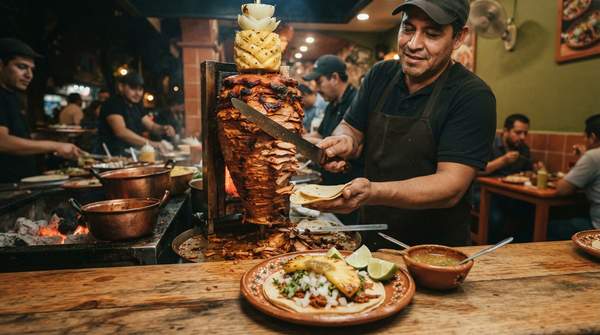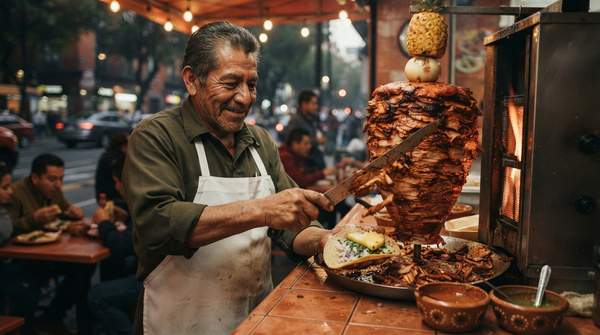
Every taco al pastor is a small monument to migration. The vertical spit of glistening, chile-stained pork spinning outside a Mexico City taquería descends directly from the lamb shawarma that Lebanese immigrants carried to Mexico in the late nineteenth and early twentieth centuries. Between that arrival and the modern taco lie two distinct transformations: first in Puebla, where the spit met pork and became tacos árabes in the 1930s, and then in the mid-twentieth century, when Mexican-born descendants traded flour bread for corn tortillas and Middle Eastern spice for chile-based adobo. Trace those steps and you have the whole story of one of the world's great street foods.
The Middle Eastern Roots: Shawarma's Arrival in Mexico
Lebanese migration to Mexico accelerated in the late nineteenth and early twentieth centuries, with many arrivals settling in the center of the country, particularly Puebla and Mexico City. They brought the food traditions of the eastern Mediterranean, above all meat cooked on a vertical spit in the shawarma family of preparations. In Mexico that technique collided with a completely different culinary landscape: corn tortillas, local chiles, regional seasonings, abundant pork, and the fast-moving social world of the taquería. Nothing about the spit itself was Mexican; everything that eventually surrounded it would be. Food writers on the dish's history consistently treat this encounter between migrant technique and local pantry as the essential first chapter rather than a footnote.
Puebla's Innovation: The Birth of Tacos Árabes
The first great adaptation happened in Puebla in 1933, when the Tabe Mena family first served what became known as the taco árabe, according to food writer Bill Esparza — who also notes that many popular accounts get the lineage wrong, since the family was of Iraqi rather than Lebanese descent. A Puebla-born account published by the tour company Eat Mexico adds a family-side explanation: the original recipe changed from lamb to pork because lamb was scarce and expensive, and locals preferred eating pork daily. "That's how pork was part of this syncretism between Lebanese and Mexican cuisines," a family member recounted.
So the taco árabe was already a hybrid: spit-roasted pork loin, chipotle salsa and lime standing in for yogurt or tahini sauce, all folded into pan árabe, a thick flour tortilla that echoes pita. The vertical spit survived intact; the flavor system around it had begun to Mexicanize. Served from stands and family businesses in Puebla, tacos árabes became a beloved regional street food in their own right — one that still thrives in Puebla today, distinct from their more famous descendant.