Cocktail clarification runs on two distinct scientific processes, and which one you pick determines what your drink becomes. Milk washing uses protein coagulation: acidic alcohol curds casein into a mass that chemically binds harsh compounds like polyphenols, softening and reshaping flavor while adding body. Agar and gelatin use gel network formation: a molecular mesh that physically traps suspended particles for visual clarity with less flavor interference. Choose milk when you want transformation; choose a gel when you want translucency.
The Science of Crystal-Clear Cocktails: An Introduction
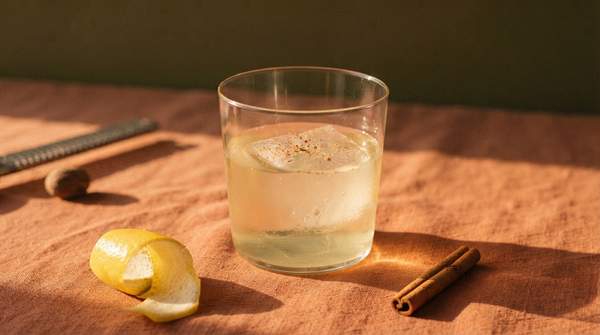
A cloudy drink isn't dirty—it's a suspension. As Dave Arnold explains in his 2014 cocktail handbook Liquid Intelligence, unclear liquids "are actually suspensions, containing particles that reflect and scatter light in a random pattern that makes the liquid appear milky. Clarification removes these particles." Even a tiny percentage of suspended material can rob a liquid of its transparency. In fresh juices, those particles are mostly plant matter—pectin and cellulose—while in spirit-forward drinks they range from botanical debris to barrel-derived compounds.
Modern bartenders have three equipment-free routes to clarity, each rooted in a different physical or chemical trick. Two of them—agar and gelatin—work by forming a gel that grabs impurities and leaves crystal-clear liquid behind, an approach Arnold identifies as his favorite for juicing. The third, milk washing, is older by centuries: milk punch dates to the 1800s, when milk was added to acidic drinks to make them gentler on the stomach. It didn't quite work as intended—the milk curdled—but the accident proved useful, because the curds could be strained away, carrying cloudiness and unwanted flavors with them.
Protein Coagulation: The Magic of Milk Washing
Milk washing is chemistry first and clarity second. When milk meets an acidic liquid, its proteins coagulate and curdle, separating from the mixture into a solid mass. That mass is a net, but an unusually choosy one: as the curds form, they bind not just suspended particles but specific dissolved molecules, particularly polyphenols—the compounds behind harshness, bitterness, and oak character in aged spirits. Order of operations matters here. Bartender Rockey, quoted by Paul Adams in SevenFifty Daily, notes that the acidic mixture should be poured into the milk, not the reverse. Pouring milk into acid exposes it to a sudden pH drop, making it curdle immediately, before it has a chance to mix with the spirit and bind the polyphenols.
That binding is what makes milk washing as much a flavor tool as a clarifying one. At Existing Conditions in Manhattan, head bartender Jack Schramm milk-washes Linie Aquavit for a drink called the Helicopter; because Linie is wood-aged, "the milk wash is stripping out some of that oak flavor, but that's not why we're doing it," he says. "It's for the beautiful texture." Rockey draws a similar distinction between washing for flavor stripping or clarification, and washing to add body and texture—in the latter case, "what you're really doing is milk dirtying."
Gel Network Formation: Agar-Agar and Gelatin Clarification
Gel clarification is the gentler mechanic: instead of chemically kidnapping dissolved compounds, you build a lattice and let it physically ensnare solids. The technique borrows from the kitchen—chefs have long used eggs or gelatin to clarify stocks, and both work in booze too. You dissolve the gelling agent in the liquid, let it set as a gel, then break the gel so the clear liquid can escape.
Gelatin, described by DrinksWorld's Andrea Ottaiano as the classic approach, binds with solid particles so they clump together; after straining, the cocktail runs clear. The process is familiar to anyone who has made Jell-O: bloom the gelatin in cold water, then gently heat until dissolved without boiling. The catch is thermal. Gelatin's gel is thermoreversible and less temperature stable than agar, requiring colder temperatures to hold its structure—fine for a chilled night of service, risky on a warm patio. Agar, a seaweed-derived gelling agent and Arnold's preferred method, sets more firmly and tolerates more heat. The standard agar workflow exploits freezing and thawing to rupture the gel and release the clarified liquid, though gel methods generally take time and can lower yield when multiple filtration passes are needed, as PUNCH's reporting notes.
Impact on Flavor, Texture, and Stability
Here's the trade-off at the heart of the whole enterprise. Milk washing is the aggressive editor: because curds bind polyphenols and similar molecules, it can strip aromatic complexity right along with the haze. Schramm's aquavit loses oak flavor; a delicate citrus cocktail could lose the very top notes you built it around. In exchange, you get a transformed drink—softened harshness and a texture many bartenders prize for its own sake.
Gel methods are the conservative editor. Agar and gelatin physically trap suspended solids—pectin, cellulose, cell walls—while leaving most dissolved flavor compounds in solution, so the core profile survives largely intact. The price of carelessness cuts both ways: Ottaiano's troubleshooting guide warns that over-filtering can leave a drink tasting weak, and that gelatin or milk can absorb too much of a cocktail's richness, leaving it feeling thin and watery. Whichever route you take, clarification carries a bonus that Sidewinder Spirits Co.'s John Kinney attributes to the technique's modern appeal: removing solids refines flavor and extends shelf life, since there's less material left to degrade.
Comparative Guide to Cocktail Clarification Methods
The table below maps each method's mechanism to its sensory consequences, so you can weigh flavor preservation against textural change, time, and ingredient constraints at a glance.
| Method | Scientific Mechanism | What It Removes | Impact on Flavor | Impact on Texture | Best For |
|---|---|---|---|---|---|
| Milk washing | Acid curdles milk proteins (casein), forming a solid mass that traps particles and binds dissolved compounds | Suspended particles plus polyphenols, including oak and harsh flavor compounds | Stripping and softening—can remove aromatic complexity along with harshness | Body and texture; prized for "beautiful texture" by practicing bartenders | Acidic drinks where you want flavor transformation as much as clarity |
| Agar-agar | Dissolved agar sets into a firm gel network that physically traps solids; gel is broken (e.g., freezing and thawing) to release the liquid | A broad range of suspended solids, including pectin and cellulose from plant material | Core profile largely preserved; over-filtering can still weaken flavor | General textural enhancement without significant added body | Clarifying juices and high-particulate liquids, especially where heat stability matters |
| Gelatin | Dissolved gelatin sets into a thermoreversible gel that clumps solid particles for straining | Suspended solids; efficacy varies with the liquid's composition | Largely preserved, though it can absorb some of the drink's richness | Can leave a drink feeling thin if too much richness is absorbed | Classic, familiar gel work where cold serving temperatures are guaranteed |
Read down the mechanism column and the decision logic emerges on its own. If your goal includes changing what the drink tastes like—taming a wood-aged spirit, muting aggressive tannins—only milk washing binds dissolved compounds, and it demands enough acidity to curdle in the first place. If your goal is purely optical, a gel method removes haze while leaving the recipe's voice mostly alone, with agar's firmer, more heat-tolerant set justifying the extra freezing step, and gelatin trading that stability for ease.
Making Your Choice: A Clear Path to Better Cocktails
The decision comes down to intent. Choose a clarification method based on whether the primary goal is flavor modification (milk washing) or visual clarity and textural enhancement (agar or gelatin), weighed against practical constraints like temperature stability and processing time. Milk washing is a two-for-one: it clarifies while it edits, but only works within the pH window that curdles casein. Agar asks for more patience—heating, setting, freezing, thawing—but rewards you with a stable gel that handles broad, particulate-heavy loads like fresh juice. Gelatin is the approachable middle path, best when your finished drink will stay cold and you want a technique you already know from the kitchen.
Whatever you choose, let the drink tell you whether it worked. The measurable indicators are the visual clarity of the final cocktail and the perceived smoothness and flavor balance upon tasting: if it's still hazy, run it through a finer strainer or give the agent more time to capture solids; if it tastes weak or feels thin, you've over-filtered and the next batch deserves a gentler hand.
Sources
- The History and Science of Clarification - Tales of the Cocktail Foundation
- The Science of Clarified Cocktails — SevenFifty Daily
- How to Clarify Cocktails - Guide to Crystal-Clear Drinks — DrinksWorld
- How to Science Your Way to a Clarified Cocktail — PUNCH
- The Art of Cocktail Clarification in Modern Mixology - Sidewinder Spirits Co