Two different chemical processes brown your food, and they taste nothing alike. The Maillard reaction needs both amino acids and sugars and kicks off at temperatures over 250 °F, delivering the savory, meaty depth behind a seared steak's crust. Caramelization involves sugars alone, begins around 320 °F (160 °C), and produces sweet, nutty, buttery notes—the stuff of caramel sauce and deeply browned onions. Identify which one is running in your pan by looking at your ingredients and your heat, and you can deliberately choose the flavor you're after.
The Science of Browning: Maillard Reaction vs. Caramelization
Calling both processes "browning" is a bit like calling a symphony and a doorbell "sound." Yes, both produce a brown gradient, but as Food Republic's Dylan Hofer explains, the two work through entirely different chemistry: Maillard browning arises when amino acids and sugars interact, while caramelization happens when sugar molecules break down on their own, without any protein involvement. Wikipedia's entry on the Maillard reaction puts it plainly: caramelization is the pyrolysis of certain sugars, whereas the Maillard reaction involves amino acids. Both are promoted by heat, and the results can look—and even taste—deceptively similar to the naked eye.
Here's the twist that makes this worth understanding: the two reactions are not mutually exclusive. Because the Maillard reaction activates at a lower temperature, you can get products of both caramelization and the Maillard reaction in the same dish. And since foods contain natural sugars even when you add none, the line between them blurs fast in a hot pan.
Maillard Reaction: Savory Depths
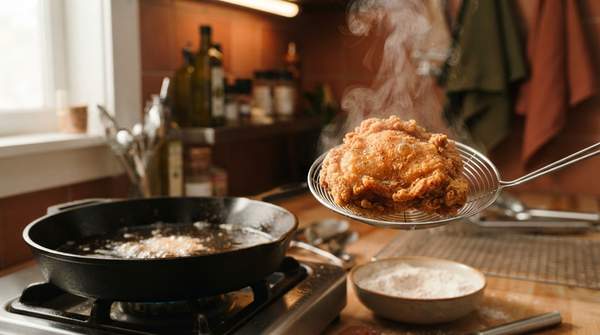
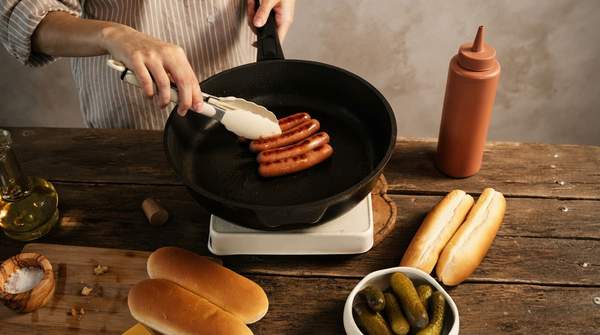
The Maillard reaction is arguably the most important flavor-producing reaction in cooking, responsible for the beautiful crust on a seared steak and the browning of cooked meats, seafood, and other protein-laden foods. It works by rearranging amino acids and certain simple sugars into ring structures that reflect light in a way that gives meat its brown color, as described by Modernist Cuisine. No added sugar required—D'Artagnan notes that all foods contain some natural sugar, so the reaction fires whenever protein meets heat.
What makes it remarkable is its range. In the cooking process, Maillard reactions can produce hundreds of different flavor compounds depending on the food's chemical constituents, temperature, cooking time, and presence of air—and those compounds often break down to form yet more flavors. Flavorists have exploited it for decades, with the majority of patents related to producing meat-like flavors. Nobel laureate Jean-Marie Lehn called it, by far, the most widely practiced chemical reaction in the world.