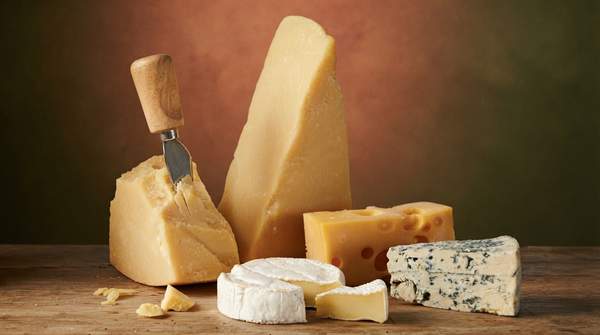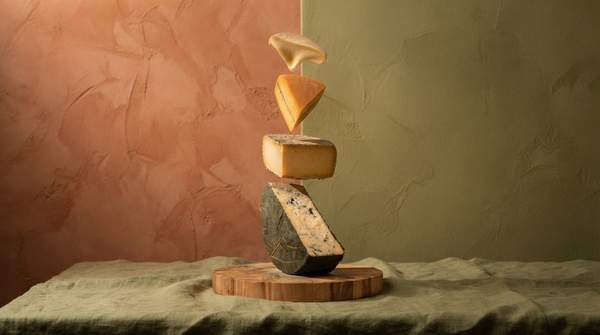
A great cheese board isn't a lucky accident — it's a deliberate spread across three dimensions: texture, flavor intensity, and milk type. That's the core principle behind the selection framework below, which turns a bewildering cheese counter into a simple decision process. Pick three to five cheeses that each occupy a different point along those dimensions, and you'll end up with a board that gives your guests somewhere to start, something to build toward, and something that surprises them at the end.
The Foundation: Why Variety Matters
The specialty retailer Cheese Grotto, which has built its guidance around exactly this problem, puts it plainly: a board stocked only with firm cheeses or only mild flavors gives guests nowhere to go. Variety is what transforms a plate of dairy into a tasting experience with an arc — an opening act, a crescendo, and a finale. Without it, even excellent cheeses blur together.
Think of each dimension as a separate dial. Texture is the physical experience, from something that yields under a knife to something you chip and shard. Intensity is the flavor journey, from gentle and buttery to assertive and lingering. Milk type — cow, goat, or sheep — is the character note, since each brings its own personality to the board. A well-built board moves across all three dials at once, which is why five wildly different cheeses can feel more coherent than five near-identical ones.
The natural starting point, according to the same guide, is a soft bloomy rind cheese — a double cream or Camembert-style variety. It's the gentle handshake before the conversation gets interesting.
Your Artisanal Cheese Board Decision Framework
Here is the repeatable method. Work through the matrix below, choosing cheeses so that no two occupy the same cell on more than one dimension. The analytical operation is simple: for each of your three to five picks, deliberately select a different texture, a different intensity level, and — where possible — a different milk type. The result is a complementary set rather than a random assortment.
| Dimension | What to Vary | How to Apply It |
|---|---|---|
| Texture | Soft, semi-hard, hard | Include at least one cheese that spreads, one that slices, and one firm enough to break or shave |
| Flavor intensity | Mild, medium, strong | Sequence the board from mildest to boldest so palates build gradually |
| Milk type | Cow, goat, sheep | Spread your picks across at least two milk types for distinct character |
In practice: start with that soft, bloomy-rind double cream as your mild anchor. Then add a semi-hard cheese at medium intensity in a different milk. Finish with something firm and assertive — ideally your third milk type. Three cheeses, three textures, three intensities, three milks: a complete arc. With four or five, you can double up thoughtfully — two cheeses sharing a texture but differing sharply in intensity, for instance — while still honoring the rule of deliberate difference.