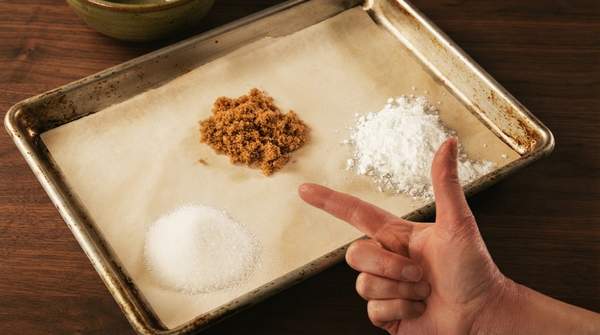
Sugar is not just sweetness in a bag — it's a structural ingredient that determines whether your cookie snaps, your brownie chews, and your cake rises with a tender crumb. The three sugars most home bakers keep on hand do very different jobs. Granulated sugar, with its medium, uniform crystals, builds air pockets during creaming that give cakes lift and a light texture. Brown sugar, which is granulated sugar blended with molasses, holds onto moisture and produces chewier, denser, more deeply flavored treats. Powdered sugar — granulated sugar ground to a fine powder with a little cornstarch — dissolves instantly and belongs in frostings and glazes, not in anything that depends on sugar for structure.
The Fundamental Roles of Sugar in Baking
Every sugar starts the same way, according to the Sugar Association: juice is extracted from sugar beet or cane, and then slight adjustments in cleaning, crystallizing, drying, and molasses content produce the varieties we know. Sugars are classified by crystal size — granulated, powdered, or superfine — and by color, and those crystal sizes carry distinct functional characteristics that suit them to different jobs.
Those jobs go far beyond sweetness. Sugar contributes to texture, moisture retention, and color development through caramelization and Maillard browning. It can even stabilize structure: Domino Sugar notes that whipped into an egg white foam, sugar reinforces the bond of water and air in meringue, keeping it from falling or leaking water during baking. And in yeast doughs, fermenting sugar releases carbon dioxide that creates pockets in the dough, giving leavened bread its soft, pillowy texture. In short, when you change the sugar, you change the architecture of the bake.
Granulated Sugar: The All-Purpose Workhorse
Granulated sugar's superpower is aeration. When you cream it with butter, the sharp-edged crystals cut into the fat and trap air bubbles. C&H Sugar describes how finer, consistent crystals cut cleanly into butter, trapping more — and smaller — air bubbles during creaming; those pockets expand in the oven, producing lift and a lighter, more delicate crumb.
The Exploratorium's Inquisitive Cooks column explains the rest of the mechanism: as a cake bakes, carbon dioxide from leaveners like baking powder and baking soda gravitates to the air spaces created by creaming. As the batter heats, that honeycomb network of bubbles expands, making the cake rise and its texture light and tender. Notably, carbon dioxide doesn't create its own resting places — it only finds the air pockets you've beaten into the batter. A well-creamed cake is tender, with even texture and good height.
Granulated sugar also earns its workhorse reputation on stability. Indiana Sugars points to it as the typical choice for maintaining the stability of baked goods like brownies, and it contributes to a crisp texture. One caveat from the same source: increasing the sugar in a dessert can lead to a softer, more crumb-like texture and alter the batter's consistency during leavening, while decreasing it can leave you with a drier result and a lighter color.