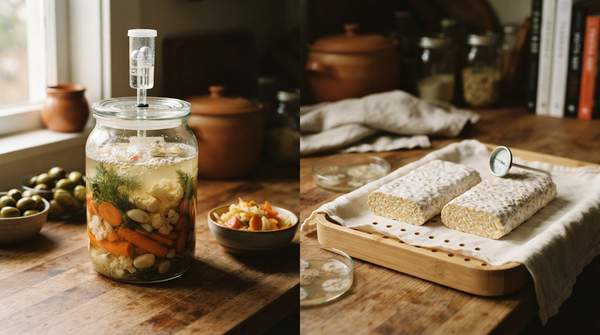
If you want to ferment vegetables and make tempeh at home, the single most important thing to understand is that these are two fundamentally different microbial projects. Vegetable fermentation is a bacterial, salt-driven, oxygen-free process; tempeh is a mold-driven, oxygen-hungry one. Confuse their requirements—salt in your tempeh, or a hot incubator on your cabbage—and you will end up with something no one wants to eat. Here is how to run both processes correctly, and how to tell them apart at every decision point.
Lacto-Fermenting Vegetables: The Anaerobic Method
The workhorses of vegetable fermentation are lactic acid bacteria—genera such as Lactobacillus, Pediococcus, Streptococcus and Leuconostoc, which South Dakota State University's food safety materials identify as the key fermenters on fresh produce. These bacteria convert vegetable sugars into lactic acid, and the lactic and acetic acid byproducts lower the pH and inhibit competing microbes. Carbon dioxide production also helps preserve an anaerobic environment inside the jar, as described in the same university extension material.
Salt is what tilts the field in the bacteria's favor. Virginia Tech's cooperative extension guide on vegetable fermentation explains that on fresh vegetables, spoilage organisms typically outnumber and outgrow the fermenting organisms, which is why unsalted produce rots. Salting or brining, along with controlling the atmosphere around the ferment, favors the growth of the fermenting organisms so they can overpower the harmful and spoilage ones. South Dakota State's guide adds that salt contributes to osmosis, pulling water and carbohydrates out of the vegetables to feed the process.
Getting started can be as simple as that: Virginia Tech describes spontaneous or natural fermentation as allowing the natural fermenting microorganisms already on the vegetables to grow. You do not need to inoculate anything. That said, South Dakota State cautions that home processors who want to use a starter culture should follow an evidence-based recipe, because adding LAB at a given stage does not guarantee they will flourish—it depends on the LAB already present, the salt concentration, the pH, the temperature and other factors.
Practically, this means vegetables submerged in a salt brine, kept under the brine with a weight, in a vessel that lets gas escape while keeping air out. Oxygen is the enemy here: Virginia Tech notes that in vegetable fermentation, yeasts and molds are lesser participants and are considered sources of spoilage. Your environmental control is salt concentration and submersion, not warmth—temperature influences which bacteria grow, so aim for steady, moderate conditions rather than a hot incubator. Success smells pleasantly sour and retains firm texture rather than softening into rot.